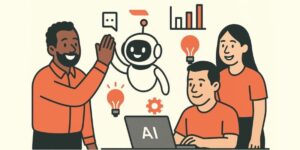
The rapid evolution of artificial intelligence is reshaping how small businesses operate, compete, and grow. As AI-powered tools become more accessible and affordable, entrepreneurs and managers are discovering new ways to automate tasks, enhance decision-making, and deliver better customer experiences. Understanding the future of AI in small business management is essential for owners who want to stay ahead of the curve and leverage technology for sustainable growth.
From automating administrative work to unlocking deeper insights from data, AI is no longer reserved for large enterprises. Today, even the smallest companies can benefit from machine learning, natural language processing, and predictive analytics. This article explores the latest trends, practical applications, and what the coming years may hold for small business leaders embracing AI-driven solutions.
For those interested in how AI is transforming specific business functions, you may also want to explore how to use ai for influencer marketing discovery for practical strategies and examples.
Key Trends Shaping AI Adoption in Small Businesses
Several major trends are driving the integration of artificial intelligence into small business management. These shifts are making advanced technology more accessible, affordable, and impactful for organizations of all sizes.
- AI democratization: Cloud-based platforms and plug-and-play AI tools are lowering technical barriers, allowing businesses without in-house data scientists to utilize machine learning and automation.
- Automation of routine tasks: From bookkeeping to scheduling, AI is streamlining repetitive work, freeing up staff to focus on higher-value activities.
- Personalized customer experiences: AI-driven chatbots, recommendation engines, and targeted marketing are helping small businesses deliver tailored interactions at scale.
- Data-driven decision-making: Predictive analytics and real-time dashboards are empowering owners to make smarter choices based on actionable insights.
- Integration with existing tools: AI features are being built into popular accounting, CRM, and e-commerce platforms, making adoption seamless for non-technical users.

How AI Is Transforming Everyday Business Operations
The impact of artificial intelligence on daily operations is already visible across a range of business activities. Here are some of the most significant ways AI is changing the way small companies work:
Automating Administrative and Back-Office Tasks
AI-powered systems can handle time-consuming administrative duties such as invoice processing, payroll management, and inventory tracking. By automating these processes, businesses reduce human error, save time, and cut operational costs. For example, AI-enabled bookkeeping software can automatically categorize expenses and flag anomalies, making financial management more efficient.
Enhancing Customer Service and Engagement
Chatbots and virtual assistants are now common on small business websites and social media channels. These AI tools can answer frequently asked questions, schedule appointments, and provide product recommendations around the clock. This not only improves customer satisfaction but also allows staff to focus on complex or high-touch interactions.
Optimizing Marketing and Sales Strategies
With machine learning algorithms, small businesses can analyze customer data to identify buying patterns, segment audiences, and personalize marketing campaigns. AI can also predict which leads are most likely to convert, enabling sales teams to prioritize their efforts. For more on leveraging AI in marketing, check out the how to use ai for visual search integration guide for e-commerce.
Emerging AI Technologies for Small Business Management
As the future of AI in small business management unfolds, several emerging technologies are set to play a pivotal role:
- Natural Language Processing (NLP): Tools that understand and generate human language are improving customer support, automating email responses, and extracting insights from unstructured data.
- Predictive Analytics: AI models can forecast sales trends, inventory needs, and customer churn, enabling proactive decision-making.
- Robotic Process Automation (RPA): Software bots are handling repetitive digital tasks, such as data entry and report generation, with minimal supervision.
- AI-powered cybersecurity: Intelligent systems can detect and respond to cyber threats in real time, protecting sensitive business data.

Challenges and Considerations for Small Business Owners
While the benefits are significant, adopting AI is not without challenges. Here are some key considerations for small business leaders:
- Cost and ROI: Although AI tools are becoming more affordable, initial investments and ongoing subscription fees can be a concern for some businesses. It’s important to evaluate the potential return on investment before committing resources.
- Data privacy and security: Handling customer and business data responsibly is critical. Owners must ensure compliance with regulations and select vendors with strong security practices.
- Change management: Integrating AI may require changes to workflows and employee roles. Training and clear communication are essential for a smooth transition.
- Vendor selection: With a growing number of AI solutions on the market, choosing the right partner can be overwhelming. Look for providers with proven track records and strong customer support.
For a deeper dive into practical steps and best practices, the comprehensive guide to using AI in small business offers actionable advice and real-world examples.
What the Next Decade Holds for AI and Small Businesses
Looking ahead, the integration of artificial intelligence into small business management is expected to accelerate. As technology matures, we can anticipate several developments:
- Greater accessibility: AI will become even more user-friendly, with intuitive interfaces and seamless integration into everyday business tools.
- More industry-specific solutions: Tailored AI applications will address the unique needs of sectors like retail, hospitality, healthcare, and logistics.
- Collaboration between humans and AI: Rather than replacing jobs, AI will augment human capabilities, enabling staff to focus on creative, strategic, and relationship-driven tasks.
- Continuous learning and adaptation: AI systems will evolve with the business, learning from new data and user feedback to deliver better results over time.
Businesses that embrace these changes early will be well-positioned to thrive in an increasingly competitive landscape. For those interested in how AI is impacting other industries, the impact of ai on insurance underwriting article provides further insights.
FAQ: AI and Small Business Management
How can small businesses start implementing AI?
Begin by identifying repetitive or time-consuming tasks that could benefit from automation, such as customer support, invoicing, or marketing. Research AI-powered tools that integrate with your existing systems. Start small, measure results, and scale up as you see positive outcomes.
Is AI affordable for small businesses?
Yes, many AI solutions are now available as cloud-based services with flexible pricing models. This makes it possible for even micro-businesses to access powerful automation and analytics tools without large upfront investments.
What skills do employees need to work with AI?
While technical expertise can be helpful, most modern AI tools are designed for non-experts. Employees should be open to learning new software, understanding data-driven insights, and adapting to evolving workflows. Training and ongoing support are key to successful adoption.
Can AI help with business growth?
Absolutely. By automating routine work, improving customer experiences, and providing actionable insights, AI enables small businesses to operate more efficiently and make smarter decisions, supporting sustainable growth.
Conclusion
The landscape of small business management is being transformed by artificial intelligence. As technology continues to advance, owners and managers who understand and embrace these trends will gain a competitive edge. By starting with practical applications and scaling thoughtfully, small businesses can harness AI to streamline operations, improve customer satisfaction, and drive long-term success.