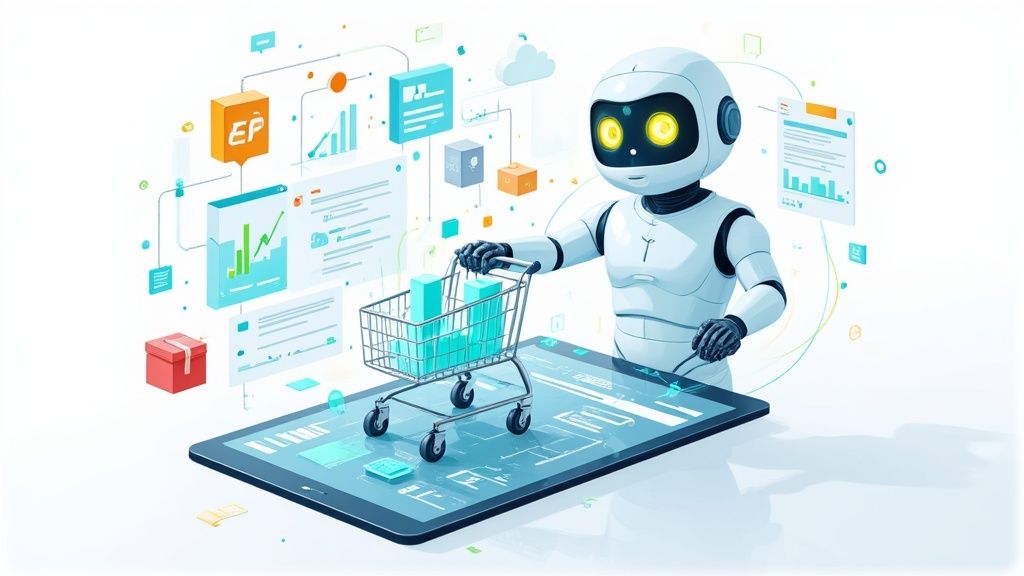

The rapid evolution of artificial intelligence is transforming how online businesses operate. Deep learning applications in ecommerce are at the forefront of this change, enabling companies to analyze massive datasets, personalize experiences, and automate processes with unprecedented accuracy. As competition intensifies, leveraging these advanced technologies is no longer optional—it’s essential for those aiming to deliver smarter insights and boost sales.
From personalized recommendations to dynamic pricing and fraud detection, deep learning is reshaping the digital retail landscape. In this article, we’ll explore the most impactful use cases, the benefits for both merchants and shoppers, and practical considerations for implementation. For those interested in related innovations, you can also learn about how to use AI for visual search integration to further enhance the online shopping journey.
Understanding Deep Learning in Online Retail
Deep learning is a subset of machine learning that uses artificial neural networks to process complex data patterns. Unlike traditional algorithms, these networks can learn from vast amounts of unstructured data—such as images, text, and customer behavior—making them ideal for the dynamic environment of online commerce.
In digital retail, deep learning models power everything from product recommendations to automated customer support. Their ability to continuously improve as more data is collected means that insights become sharper and more relevant over time. This leads to better decision-making for businesses and a more tailored experience for shoppers.
Personalized Recommendations: Enhancing Customer Experience
One of the most recognizable deep learning applications in ecommerce is the recommendation engine. By analyzing browsing history, purchase patterns, and even visual preferences, these systems suggest products that are most likely to interest each individual shopper.

Personalized recommendations drive higher conversion rates and increase average order value. For example, when a customer views a product, deep learning models can instantly suggest complementary items or alternatives based on similar user profiles. This not only improves the shopping experience but also encourages repeat visits and loyalty.
Retailers like Amazon and Netflix have set the standard for recommendation systems, but even smaller stores can now access these tools through cloud-based AI platforms. The key is to integrate these models with your existing data sources and continuously refine them for accuracy.
Visual Search and Image Recognition
Visual search is another area where deep learning excels. Shoppers can upload a photo or screenshot, and the system will identify similar products in the catalog. This is especially useful for fashion, home décor, and electronics, where visual appeal is a major factor in purchasing decisions.
Image recognition models can also automate product tagging, categorize inventory, and detect counterfeit goods. By streamlining these processes, businesses save time and reduce errors, while customers enjoy a more intuitive way to discover products. For a deeper dive into this topic, see our guide on how to use AI for visual search integration.
Dynamic Pricing and Inventory Optimization
Setting the right price at the right time is crucial for maximizing revenue. Deep learning models analyze market trends, competitor pricing, demand fluctuations, and even weather patterns to recommend optimal prices. This level of automation allows retailers to react instantly to changes in the market, ensuring they remain competitive without sacrificing margins.
Inventory management also benefits from these technologies. Predictive analytics powered by deep learning can forecast demand, identify slow-moving stock, and optimize restocking schedules. This minimizes overstock and stockouts, reducing costs and improving customer satisfaction.
Fraud Detection and Security
Online fraud is a persistent threat, but deep learning offers robust defenses. By examining transaction patterns, device fingerprints, and behavioral cues, these systems can flag suspicious activity in real time. Unlike rule-based systems, deep learning models adapt to new tactics as fraudsters evolve their methods.

Effective fraud detection not only protects revenue but also builds trust with customers. As these models learn from new data, they reduce false positives and ensure legitimate transactions are processed smoothly.
Automated Customer Support and Chatbots
Deep learning powers advanced chatbots and virtual assistants that handle customer inquiries 24/7. These systems understand natural language, interpret intent, and provide accurate responses—often resolving issues without human intervention.
Automated support reduces operational costs and improves response times. For complex issues, chatbots can escalate to human agents with full context, ensuring a seamless handoff and higher customer satisfaction.
Driving Business Growth with Data-Driven Insights
The true value of deep learning applications in ecommerce lies in their ability to uncover actionable insights from data. By analyzing customer journeys, purchase triggers, and feedback, businesses can identify new opportunities for growth and refine their strategies.
For example, segmentation models can group customers by behavior, enabling targeted marketing campaigns. Sentiment analysis can gauge public perception of products or brands, guiding product development and messaging. These insights empower decision-makers to act quickly and confidently in a fast-moving market.
For a broader perspective on how AI is reshaping commerce, the agentic commerce opportunity explores how AI agents are creating new possibilities for both consumers and merchants.
Challenges and Considerations for Implementation
While the benefits are clear, adopting deep learning in ecommerce comes with challenges. High-quality data is essential—models are only as good as the information they learn from. Privacy and ethical considerations must also be addressed, especially when handling sensitive customer data.
Integration with existing systems can require significant investment in infrastructure and expertise. Businesses should start with clear objectives, pilot projects, and a roadmap for scaling successful initiatives. Collaboration between technical and business teams is critical to ensure alignment and maximize ROI.
Future Trends in AI-Driven Online Retail
The future of ecommerce will be shaped by even more sophisticated AI tools. Expect to see greater use of real-time personalization, voice commerce, and AI-powered logistics. As deep learning models become more accessible, even small and mid-sized retailers will be able to compete with industry giants.
Staying informed about the latest advancements and best practices will be key to maintaining a competitive edge. For those exploring AI in other industries, our article on the impact of AI on insurance underwriting offers insights into how these technologies are transforming risk assessment and decision-making.
FAQ: Deep Learning and E-Commerce
How does deep learning improve product recommendations?
Deep learning analyzes vast amounts of customer data, such as browsing and purchase history, to identify patterns and preferences. This allows recommendation engines to suggest products that are highly relevant to each individual, increasing engagement and sales.
What are the main challenges of using deep learning in online retail?
The primary challenges include obtaining high-quality data, ensuring data privacy, integrating AI systems with existing platforms, and managing the costs and expertise required for implementation. Addressing these issues is crucial for successful adoption.
Can small businesses benefit from deep learning technologies?
Yes, cloud-based AI services and pre-built models have made deep learning more accessible to small and medium-sized businesses. These tools can be integrated with ecommerce platforms to enhance personalization, automate processes, and improve decision-making without the need for large in-house teams.